What is unique about Mondaloy?
It has the kind of oxygen compatibility and strength we need to build rocket engine components. Prior to Mondaloy, off-the-shelf alloys that were oxygen-compatible were quite weak, which meant it was going to be hard to build structural components out of them. The things you put in the alloy to make it stronger are the things that take away some of this oxygen compatibility. The real challenge was to find that sweet spot where the alloy was strong enough and oxygen compatible enough for a rocket engine component.
When did the government begin funding that work?
In 1999, we entered the first cost-sharing program with the Air Force Research Laboratory. In the early 2000s, NASA was also very interested in having a big oxygen-rich booster engine. Because Mondaloy is a family of alloys, I worked with the Air Force to scale up production, look at different processing methods and get the material ready for insertion into a rocket engine.
All of that positioned us very nicely to have the alloy at a maturity level that it could be used for the AR1 and the Hydrocarbon Boost and a few other programs.
How is Mondaloy used in AR-1 and the Hydrocarbon Boost Technology Demonstrator?
They both have about 12 different components that are made out of Mondaloy.
In AR1, it’s used in most of the components that will be exposed to hot gaseous oxygen, such as the preburner, turbine rotor, turbine housing, ducts, lines and hot gas manifold.
Can Mondaloy be additively manufactured?
Yes. There are additively manufactured parts of Mondaloy on the AR1. We can manufacture it with conventional wrought methods and powder metallurgy, which includes additive manufacturing.
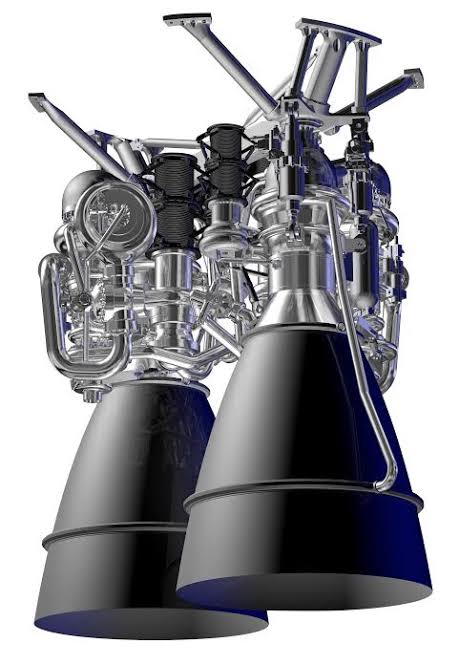
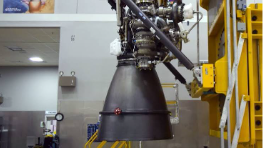
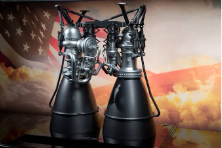
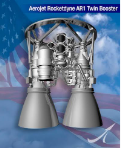
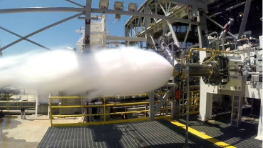
The Aerojet Rocketdyne AR1 is a 500,000-pound thrust-class American liquid-propellant rocket engine designed to serve as a booster stage engine. The U.S. Air Force originally funded the engine’s development to eliminate domestic reliance on the Russian-built RD-180 engines. However, the AR1 currently lacks a primary launch vehicle platform after losing a major contract. In terms of technical specifications, it uses a propellant mixture of liquid oxygen (LOX) and RP-1 (highly refined kerosene), and employs an oxidizer-rich staged combustion cycle, making it the first American-built engine of its class to utilize this specific high-efficiency configuration. The engine generates 500,000 pounds (2,224 kN) of thrust at sea level and 560,000 pounds (2,500 kN) in a vacuum while incorporating widespread 3D-printed components, including major segments of the main injector, to reduce production costs and time. Regarding project history and current status, Aerojet Rocketdyne pitched the AR1 to United Launch Alliance (ULA) as a direct, drop-in replacement engine for the first stage of the Atlas V rocket, but ULA rejected the AR1 in favour of Blue Origin’s methane-fueled BE-4 engine to power its next-generation Vulcan Centaur rocket. Despite losing the ULA contract, Aerojet Rocketdyne utilized its remaining Air Force funding to complete the assembly of the first prototype engine, with component testing taking place at NASA’s Stennis Space Center. Ultimately, the engine has no active production schedule or dedicated flight manifests, though the company has previously marketed the engine to commercial space startups for potential integration into future medium-lift launch concepts.